





In today’s complex and fast-moving workplaces, leadership success depends on more than technical expertise or experience. It depends on how leaders show up emotionally, how they respond under pressure, connect with others, and make decisions that balance results with people. This is where the Genos Emotional Intelligence (EI) Leadership Model provides a powerful and practical framework.
The Genos model focuses on observable behaviors - in other words, what leaders actually do with their emotional intelligence. When combined with Genos Leadership Assessments and Feedback Reports, the model becomes a practical roadmap for developing leaders who consistently use emotional intelligence in order to be more effective.
What Is the Genos Model of Emotional Intelligence?
The Genos Emotional Intelligence Leadership Model explains what emotional intelligence looks like when applied directly to leadership. Rather than treating EI as a personality trait or fixed capability, Genos defines emotional intelligence as a set of skills that can be measured, developed, and applied.
At the heart of the model is a simple but powerful idea: The six emotional Intelligence competencies, when demonstrated frequently, move leaders from states of being that are unproductive, to states of being that are productive, directly influencing how people feel, perform, and engage in a positive way.
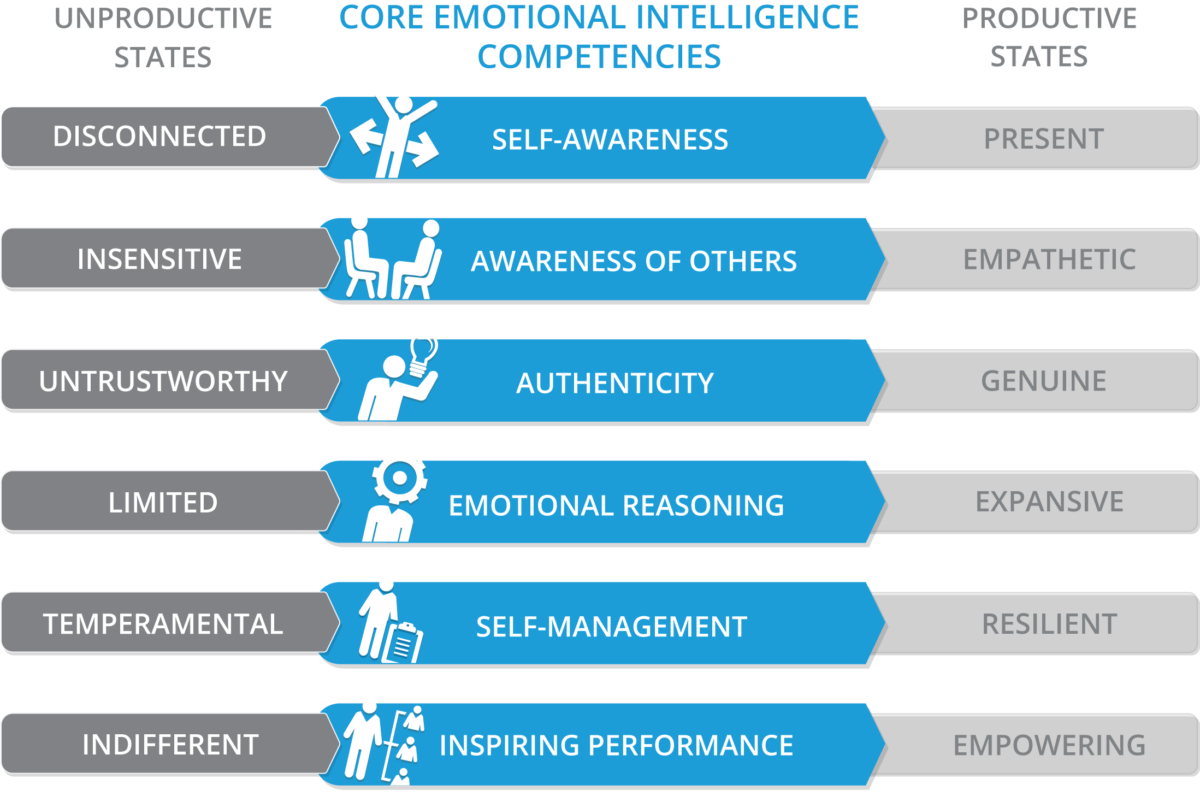
Parts of the Model
Unproductive States of Being
Unproductive states of being are shown on the left. These states; disconnected, insensitive, untrustworthy, limited, temperamental and indifferent, describe the ways that leaders show up when they are low in the demonstration of emotional intelligence competencies.
The Emotionally Intelligent Leadership Competencies
The EI leadership competencies shown at the core of the model are the competencies and skills that comprise the model and are measured in the assessments.
Productive states of being
Productive states of being on the right side describe how leaders show up when EI is applied effectively.
For every EI Competency, there is an unproductive state of being and a productive state of being.
The purpose of the Genos model is not to label leaders as “good” or “bad,” but to:
- Increase awareness of leadership behaviors
- Provide clear language for feedback
- Support intentional and specific development toward more productive leadership impact
How to Read the Genos Leadership Model
The Genos model is designed to be intuitive and actionable. At the center are the core emotional intelligence leadership Competencies. When demonstrated frequently, these competencies enable leaders to be more aware, empathetic, genuine, expansive, and resilient and empowering in their leadership. When the emotional intelligence competencies are underdeveloped or not applied consistently, leaders are more likely to operate in unproductive states such as being disconnected, insensitive, guarded, limited, reactive or indifferent to their direct reports.
Importantly, the model acknowledges a key reality of leadership: Even highly capable leaders move between productive and unproductive states. The goal of emotional intelligence development is not perfection. Rather, the model provides a framework for awareness, conscious choice-making, and improvement.
The Actionable Competencies at the Core of the Genos Leadership Model
What makes the Genos model especially powerful is its focus on actionable leadership behaviors. Each competency reflects how leaders apply emotional intelligence in real situations.
Self-Awareness: The Aware Leader
Self-awareness is about understanding one’s behavior, strengths, limitations, emotions, and impact on others. Aware leaders:
- Understand how their behavior affects performance and engagement
- Seek and respond to feedback
- Behave consistently with their values and expectations
This competency is foundational because leaders cannot intentionally adjust what they are not aware of.
Awareness of Others: The Empathetic Leader
Awareness of others focuses on noticing, acknowledging, valuing, and responding effectively to people. Empathetic leaders:
- Make others feel appreciated
- Adapt their leadership style to fit different individuals and situations
- Balance achieving results with people’s needs
Because leadership is fundamentally about facilitating performance through people, empathy is a core driver of engagement and trust.
Authenticity: The Genuine Leader
Authenticity is about expressing thoughts and emotions openly and appropriately, while honoring commitments. Genuine leaders:
- Communicate honestly and respectfully
- Encourage open debate and challenge
- Model openness so others feel safe to do the same
Authenticity builds trust and supports healthy, productive conversations.
Emotional Reasoning: The Expansive Leader
Emotional reasoning is the ability to integrate emotions and feelings with facts and technical data when making decisions. Expansive leaders:
- Consult others and explain decision rationale
- Consider multiple perspectives and the broader impact of their decisions and actions
- Make ethical decisions
Emotional reasoning helps leaders make better, more inclusive decisions in complex environments.
Self-Management: The Resilient Leader
Self-management focuses on managing emotions, behavior, time, and on continuous improvement. Resilient leaders:
- Regulate emotions under pressure
- Maintain a positive, energizing presence
- Adapt quickly and learn from mistakes
Because a leader’s mood is contagious, self-management is critical to sustaining performance and well-being across teams.
Assessments and Feedback Reports: Identifying Strengths and Development Opportunities
The Genos Leadership Assessments and Feedback Reports bring the model to life by providing clear, behavior-based feedback.
These reports typically gather feedback from:
- The leader themselves
- Managers
- Peers
- Direct reports
This multi-rater approach highlights both strengths and development opportunities. In other words, behaviors that leaders are already using effectively and behaviors that may be limiting impact or engagement.
Rather than vague scores, Genos reports describe specific leadership behaviors, making it easier for leaders to understand how they are perceived, under which circumstances they are operating on the productive side of the model, and when stress or habits may be pulling them toward unproductive states. This clarity is what transforms feedback into something developmental.
Practical Ways to Apply Assessments and Report Insights in Leadership Development and Coaching
Moving the Organization Toward the Productive Side of the Model
Feedback only creates value when it is applied. The Genos model, assessments and reports are designed to support practical, sustainable development.
In leadership development programs such as Lead, Empower and Thrive with EI, reports can be used to:
- Build self-awareness and empathy
- Identify strengths and common development themes
- Turn feedback into customized actionable development steps aligned with business priorities
In coaching, feedback reports become a powerful conversation tool:
- Coaches help leaders interpret results without judgment
- Leaders identify key behaviors to focus on
- Development plans are linked directly to real leadership situations
At the organizational level, Genos insights can:
- Create a shared language for emotionally intelligent leadership
- Align leadership expectations across roles and levels
- Support cultural shifts toward trust, resilience, and engagement
Consistent use of the model helps move leaders and entire organizations toward the productive side of leadership, even during times of turbulence and change.
Bringing It All Together
By focusing on observable behaviors, supported by robust assessments and feedback reports, the Genos Emotional Intelligence Leadership model helps leaders:
- Understand how they show up
- Make intentional adjustments
- Strengthen their impact on people and performance
When leaders apply emotional intelligence consistently, they create environments where others can perform, grow, and thrive.
